News
Gastronomika celebrates its first International Cod Festival with a journey through centuries of history and cuisine
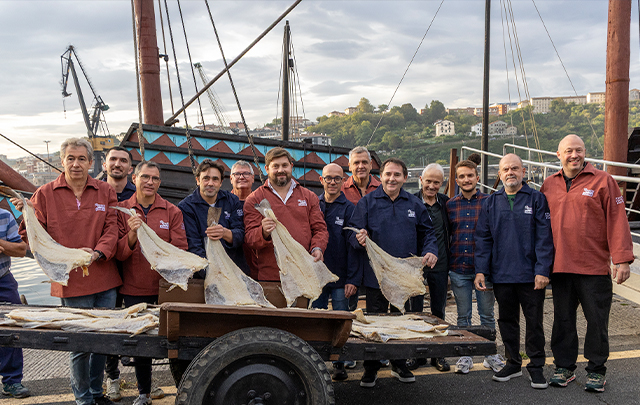
San Sebastián Gastronomika dedicated its entire morning program on the second day to the First International Cod Conference, a new initiative and a milestone for the gastronomic conference that succeeded in demonstrating the extent to which food can tell the story of the world. “It’s a fish of such historical and geostrategic importance that it’s surprising events like this haven’t been held before,” commented Benjamín Lana, director of San Sebastián Gastronomika Euskadi Basque Country. The day began with a cod unloading in Pasaia, the port in Gipuzkoa where, for centuries, the world’s largest volume of this fish was unloaded. The chefs who would later take part in the event were tasked with retrieving the salted pieces from the hold of the Nao San Juan, a replica of the 16th-century Basque whaling ship that sank in 1565 off Red Bay, on the coast of Labrador (present-day Canada). After unloading, the more than 100 kilograms of cod were loaded onto an oxcart and transported to the Kursaal.
Once at the auditorium, a group of Basque chefs led a tour through cod-based cuisine across the Basque Country and Navarre: Pablo Loureiro (Casa Urola, San Sebastián), Javier Díaz (Restaurante Alhambra, Pamplona), Beñat Ormaetxea (Jauregibarria, Amorebieta, Biscay), and Jon Gil Zárate (Ahantz Espacio Gastronómico, Ugao Miraballes, Biscay). Javier Díaz chose “ajo arriero” as a traditional recipe from Navarre, a region through which muleteers passed while transporting salted cod into the interior of Spain. Beñat Ormaetxea explained the secrets of pil pil, Bizkaia’s signature dish, and how factors such as temperature, batch size, and above all, the cooking process, are fundamental to the dish’s quality. Pablo Loureiro, representing the classic San Sebastián restaurant Casa Urola, focused on gelatin. Fish cheeks and tripe took center stage in his creations. And Jon Gil Zárate from Álava paid homage to shipboard cuisine and sauces.
After this journey through tradition, it was the turn of Josean Alija (Nerua* Bilbao), whose presentation focused on the tension between tradition and the avant-garde in cod cuisine, showcasing recipes and constant reflection on a fish often absent from haute cuisine but one that has never left Nerua’s menu.
One of the highlights of the morning was the lecture by American journalist Mark Kurlansky, author of *Cod: A Biography of the Fish That Changed the World* and the bestseller *Salt: A Fascinating History of the World’s Most Essential Mineral*. Speaking before a packed auditorium, the master began his talk by lamenting that today the Basque Country is known for its cheesecake, and he recalled the importance of a people he knows well—and about whom he has written extensively—the Basques—in the history of cod fishing and trade. Kurlansky highlighted the central role of chefs in the culinary culture surrounding a fish that today faces the threat of extinction. He traced the history of explorers, merchants, writers, chefs, and fishermen from around the world whose lives have been intertwined with this salted fish from the Middle Ages to the present day.
The American writer’s presentation was followed by a unique tribute to cod cuisine around the world, featuring chefs Pol Andrias Ziska (Paz**, Tórshavn, Faroe Islands), Christopher Haatuft (Lysverket*, Bergen, Norway), Vítor Adão (Plano, Lisbon, Portugal), Omotoyosi Odusanwo (Ìtàn Kitchen, Lagos, Nigeria)—who had to participate virtually due to administrative issues that prevented her from traveling—Daniel Canzian (Daniel Canzian, Milan, Italy), and the Spanish chef Eduard Gascons (Els Tinars*, Girona). On stage, the chefs explained how they use cod and shared the most traditional recipes from their countries. Among other things, attendees were able to appreciate—not only visually and through the chefs’ words, but also through their palates, since all Gastronomika presentations are accompanied by tastings—the difference between dried cod (traditional among Norwegians, who also introduced it to Africa) and salted cod, and it was shown that in Italy, Portugal, and even in the Catalan Empordà region, both varieties are consumed. In the Faroe Islands, where cod is still a staple food today, fresh cod—abundant in their waters—is consumed.
Vítor Adão highlighted the rich cod culture that exists in Portugal, where, he explained, cod from various origins and with different curing levels is consumed. “You could map out Portugal based solely on the variations in its cuisine,” he said, and treated the audience to a delicious dish made with long-cured cod from the Faroe Islands, cod tripe, and a spiral of French fries stuffed with brandade.
Following the session on cod, the audience welcomed one of the most inspiring minds in contemporary cuisine, Andoni Luis Aduriz, with a standing ovation; he delivered a presentation on “nostalgia for the future.” “The future is built from fragments of the past,” declared Aduriz, who presented some of the latest creations developed at Mugaritz, including a savory ‘contesa.’
The morning session concluded with an interesting roundtable discussion on knives in haute cuisine, which served to highlight the knife as an essential kitchen tool and, at the same time, an object of precision, culture, and passion. Alatz Bilbao, chef at Bakea* (Mungia, Bizkaia); Hideki Matsuhisa, chef at Koy Shunka* (Barcelona); and Nieves Barragán, chef at Sabor* (London), shared their personal relationships with knives from a professional perspective, while Nacho Cervantes García, Arcos’s communications director, provided the industry’s perspective. The conversation covered choosing the right tool, materials, sharpening, maintenance, and adapting the knife to each chef and each ingredient, highlighting that for a chef, choosing and caring for a knife is a very personal matter: there are knives to cherish and knives to share—a tool that is part of each chef’s unique cooking style.
What does the sea really taste like? Starting with this question, Jacopo Ticchi, from Da Lucio* (Rimini), explored his unique approach to working with whole fish, championing aging, using the fish from head to tail, and making the most of every cut. An exploration in which time, ingredients, and technique come together on the plate—seen as a tool that connects cuisine, storytelling, service, and economics.
Mauro Colagreco has forged his culinary identity between Argentina and France, but he insists that a chef is much more than just his place of origin. On stage, he spoke with Benjamín Lana, director of San Sebastian Gastronomika, and the chef of Mirazur championed a cuisine rooted in nature and creative freedom: “Identity is a combination of all these elements: origins, memories, the flavors of childhood, travels, and encounters—but also a place, a territory.”
For Colagreco, the haute cuisine of the future must combine creativity and honesty with health, sustainability, and respect for the customer and for nature. He also advocates for reducing restaurants’ environmental impact and highlights Mirazur’s efforts to combat plastic use and offset its carbon footprint. In the face of the culture of rankings, he advocates replacing competition with collaboration, echoing Gastón Acurio: “It’s better to share than to compete.” And he asserts that a restaurant’s true success lies in its ability to reinvent itself, to inspire, and to keep doing interesting things. Regarding France and Argentina, he sees enormous gastronomic potential in both countries—thanks to the new generation of French chefs as well as Argentina’s diverse climate and produce.
Quique Dacosta’s presentation asserted that haute cuisine is the result of a collective movement and began with a tribute to the pioneers of New Basque Cuisine, whose influence continues to inspire new generations. From there, Quique Dacosta and his team demonstrated live how to transform locally rooted ingredients and recipes into contemporary dishes, in a culinary approach that draws on memory to seek new forms of expression. During the session, Dacosta also paid tribute to chefs who have inspired him and presented Pedro Subijana, Nacho Manzano, Nieves Barragán, and Luis Lera with his own recipes. The sunflower—utilized from its seeds to its sprouts, flowers, and stems; the octopus, reinterpreted from Dénia’s traditional “bolsa de p0p”; and the allipebre, reimagined with conger eel and red mullet instead of eel—served to illustrate a philosophy rooted in ingredients, the region, and culinary research. “We’re a produce-focused restaurant, but we’re also a comfort-food restaurant,” Dacosta asserted, before concluding with a duck dish inspired by the ‘pelota de cocido’ and presented in the shape of a croissant.
The afternoon also featured the presence of Murcia-based chef Juan Azorín, head chef at Estirpe (Yecla), who delved into vegetable garums. Francis Paniego, who hadn’t visited Gastronomika in eight years, closed out the event “with the same excitement as the first day and the same nerves.” His “moría” cuisine brought an intense day to a close.
Related news
News
San Sebastian Gastronomika wraps up this year's event, which brings together the pioneers of New Basque Cuisine with the next generation
News
Tatapas Gastroteka and Atari Gastroteka, winners of the 6th Gipuzkoa 2026 Pintxos, Banderillas, and Miniature Cuisine Championship
News
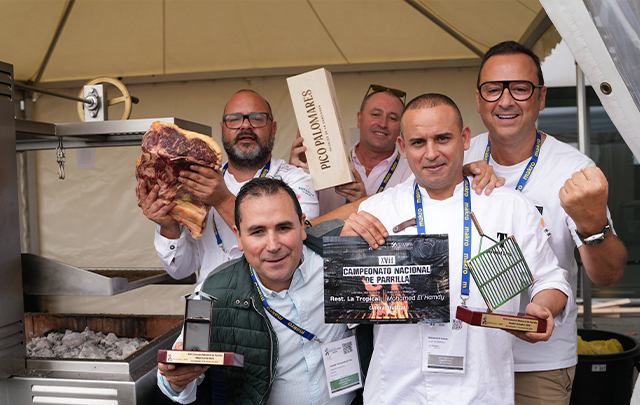
La Tropical Defends Its Title at the San Sebastian Gastronomika National Barbecue Championship
The restaurant from Murcia has been crowned champion for the second time—following its 2023 victory—with a txuleta from Trasacar
News
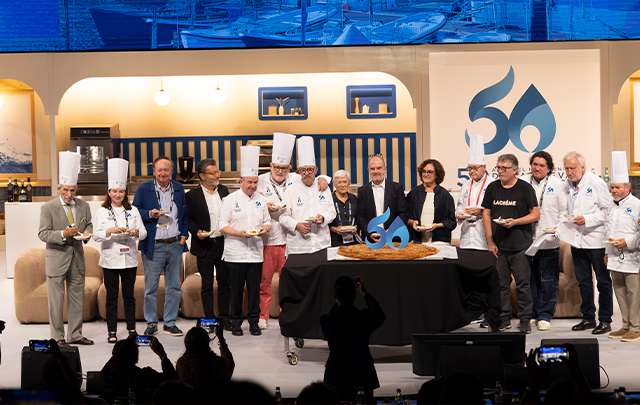
The New Basque Cuisine celebrates its heritage at Gastronomika: creative freedom and team spirit
News
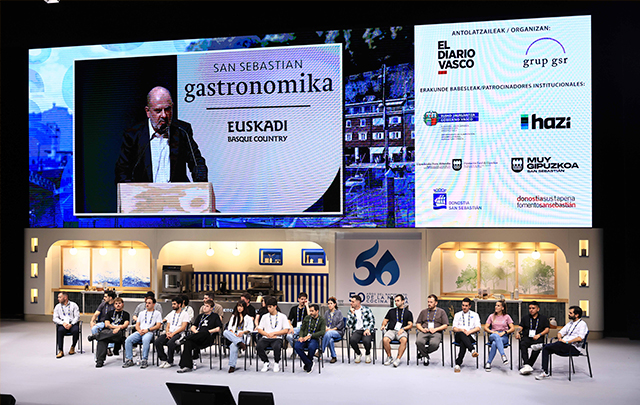
OFF Gastronomika kicks off at the Kursaal, giving a voice to a new generation to envision the future of gastronomy
News
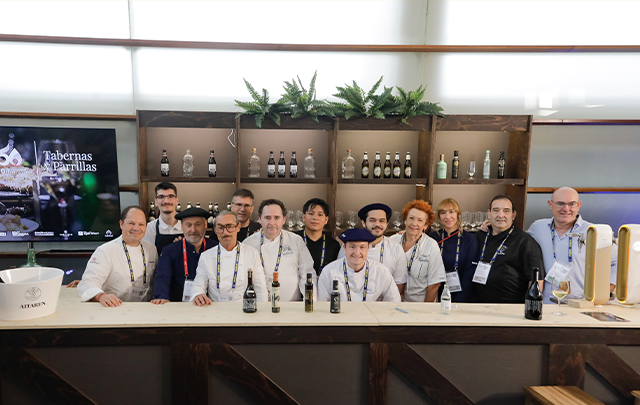
The seven wonders of txipiron
San Sebastian Gastronomika is gearing up to showcase the endless possibilities of a species so deeply rooted in our culture
News
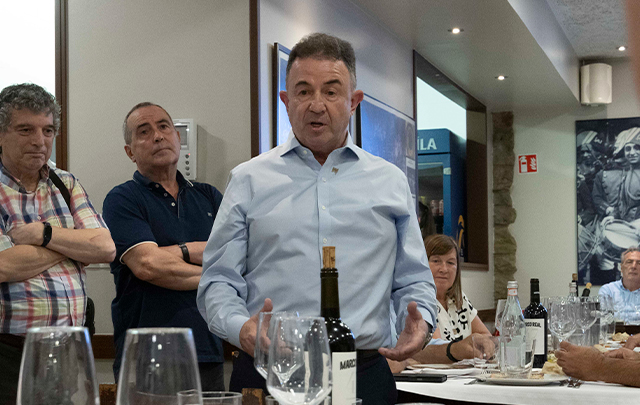
Martintxo received a warm welcome from the gastronomic societies at an intimate tribute
The lunch at the Unión Artesana, held the day before he received the Tribute Award, was a touching occasion for the chef
News
The 3rd Tabernas and Parrillas Forum will explore how the traditional bar is adapting to a new generation of customers
News

The most maritime and experiential edition of Gastronomika celebrates half a century of New Basque Cuisine
News
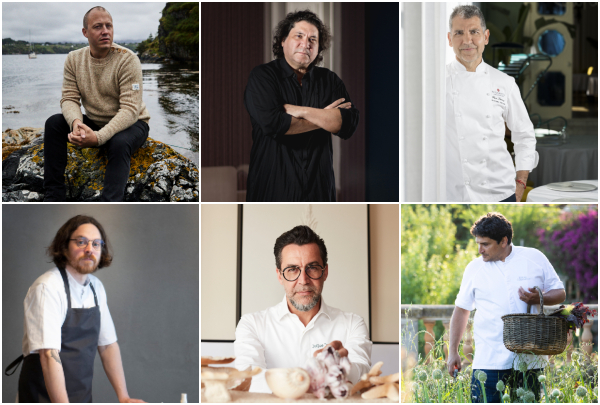
Gastronomika 2026 is broadening its international outlook by welcoming Mark Kurlansky, Mauro Colagreco, Jacopo Ticchi and Poul Andrias Ziska.
The 28th edition of the congress, which will take place from 5 to 7 October under the slogan 'The spark that lit the fire', will feature new voices as part of a programme dedicated to the 50th anniversary of New Basque Cuisine. This year will also see a global cod festival, with chefs from various countries taking part.